
In our latest interview with a PhD student in climate, PLOS Climate speaks to Krishna Girish of the BioDICée group at ISEM…
PLOS Climate PhD interview: Nuwahereza Nelson
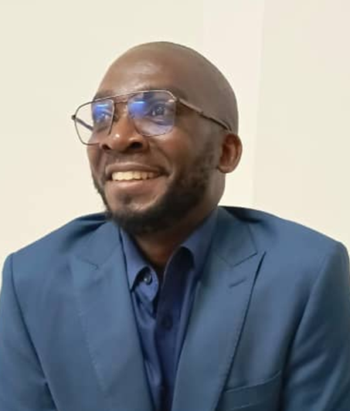
In the next instalment of our series of interviews with PhD students in climate research, PLOS Climate speaks to Nuwahereza Nelson of the University of Nigeria, Enugu Campus.
What did you study before your PhD, and why did you decide to go on to do a PhD?
Before starting my PhD, I trained in conservation forestry and environmental management, completing a BSc in Conservation Forestry and Production Technology and later an MSc in Forestry and Biodiversity Management at Makerere University. My master’s training focused on Nature-based Solutions for flood risk reduction (Assessment of the adoption of nature-based solutions for flood risk mitigation: Socio-economic determinants in the River Nyamwamba catchment, Uganda) and was supported through the Environmental Risk Management Under Increasing extremes and Uncertainty (MERIT) Project by NORHED, I also became involved in research networks, including my current affiliation as a Research Fellow with the Africa Research Impact Network — my profile.
To answer your question of why I decide to go on to do a PhD. For over 7 years, I worked on climate policy implementation, REDD+, transparency systems, and climate finance readiness in Uganda and within international climate processes. Through this experience, I became increasingly aware that while African countries are making increasingly ambitious climate commitments, many are faced with challenges in implementation, including high costs, fragmented planning, and reliance on external finance and technical frameworks that do not always reflect local realities. I decided to pursue a PhD to move beyond implementation support and critically examine how climate commitments themselves are designed, and how they could better support self-reliance and transformative adaptation in Africa. My PhD is supported by a European Union–funded Intra-Africa Academic Mobility Program—Homegrown Clean Energy Solutions initiative
Could you tell us about your project? What are the key questions you’re hoping to address, and what methods/approaches are you using?
My PhD explores pathways to climate self-reliance and transformative adaptation in Africa by examining how Nationally Determined Contribution (NDC) design choices shape real-world outcomes. The study focuses on conditionality, vertical planning coherence, use of Indigenous knowledge–woven climate actions, and Nature-based Solutions, and how these influence NDC implementation costs, dependence on external finance, and long-term resilience.
Studies have shown that Africa is disproportionately affected by climate change despite contributing very little to global greenhouse gas emissions (Gases responsible for climate change), and that economically and institutionally underdeveloped regions like Africa are especially vulnerable. At the same time, under the Paris Agreement, African countries, like other parties to the agreement are expected to deliver progressively ambitious climate commitments— NDC. Evidence from climate finance and NDC analyses shows that most of Africa countries commitments are heavily conditional on external support. Studies have also shown that this reliance can steer adaptation toward high-cost, externally driven interventions that are not always well aligned with local realities, and that may risk maladaptation and long-term dependency.
Against this backdrop, my research asks five linked questions. First, what environmental and socio-ecological factors explain disparity in African NDCs conditionality? Second, what are implications of planning coherence or lack of it between national and sub-national institutions on NDC implementation costs? Third, what characteristics of Nature-based Solutions best support sovereignty, cost-effectiveness, and resilience in African contexts? Fourth, under what governance and socio-economic conditions do Indigenous knowledge systems most enhance climate resilience? And finally, how do UNFCCC processes influence the way Indigenous Knowledge is represented and operationalised in African climate commitments?
One of the study’s key innovations is the development of a sovereignty-centred typology of Nature-based Solutions. Rather than replacing existing global standards, such as those developed by the IUCN, this typology complements them by adding a climate adaptation sovereignty lens that considers transformative potential, Indigenous knowledge richness, cost profiles, and maladaptation risks.
Methodologically, the research combines a continent-wide analysis of African NDCs with comparative case studies in Uganda, Ghana, and Nigeria, alongside policy and institutional analysis of relevant UNFCCC processes. Together, these approaches allow me to link high-level climate commitments to on-the-ground governance, costs, and adaptation outcomes.
What excites you most about your project, and about the wider field?
I am particularly excited by the project’s potential to challenge assumptions in climate finance by reframing Africa’s climate challenge away from filling finance gaps toward reducing the cost of climate action through locally grounded design choices, vertical planning coherence, and knowledge pluralism. —disrupting Africa’ climate finance demand–supply curve from the demand end. More broadly, I am inspired by the growing shift in climate research toward questions of power, sovereignty, justice, and transformation, and by work that recognises Indigenous and local knowledge as central to effective and legitimate adaptation rather than supplementary.
Where you would like to take your career next?
Through the PhD, I aim to strengthen my ability to generate policy-relevant research that bridges theory, governance, and practice. Looking ahead, I hope to continue working at the interface of research, climate policy, and international climate governance, bringing African lived experience to adaptation, climate finance reform, and knowledge pluralism.
What are your thoughts on the future of climate research?
There is a growing presence of African scientists in the climate research space, and I expect to see more studies informed by lived experience and regional perspectives. I also see a gradual shift toward integrating multiple forms of knowledge—beyond modern scientific approaches—into climate action. Climate research will be most impactful when it helps countries achieve greater resilience with fewer resources, and when it supports transformative adaptation that strengthens autonomy, justice, and long-term sustainability.
What does “climate self-reliance” mean to you?
To me, climate self-reliance refers to the ability of countries to design and implement climate action that is affordable, locally owned, Indigenous-knowledge-woven, and politically sustainable, while engaging international support on more equitable and strategic terms rather than as a condition for action.