
In our latest interview with a PhD student in climate, PLOS Climate speaks to Krishna Girish of the BioDICée group at ISEM…
PLOS Climate PhD interview: Claudia Offner
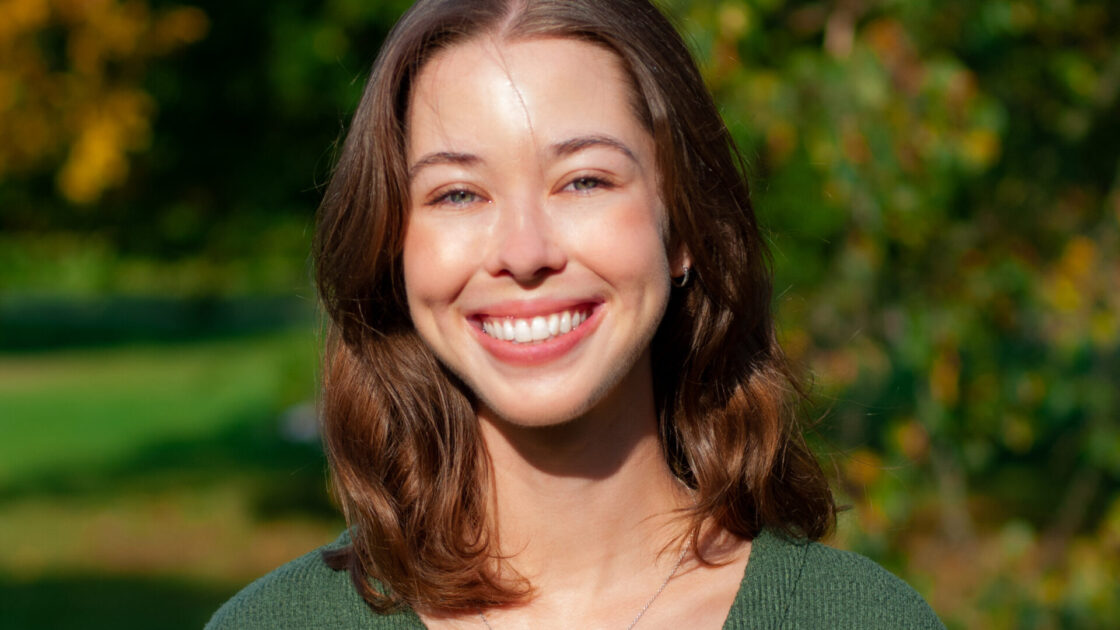
In the next instalment of our series of interviews with PhD students in climate research, PLOS Climate speaks to Claudia Offner of the British Antarctic Survey/University of Cambridge.
What did you study before your PhD, and why did you decide to go on to do a PhD?
My path into climate and health research has not been straightforward.
Before starting my PhD, I completed an MA in Psychology and Business at the University of Edinburgh, where I initially struggled to identify skills and research areas that truly engaged me. Fortunately, during the final summer of my degree, I attended a Climate-KIC summer school. This experience opened my eyes to the world of GIS and satellite data, introducing me to a set of skills that I both enjoyed and excelled in. Building on this interest, I went on to complete an MSc in Geospatial Sciences at University College London, where I applied GIS techniques to projects focused on disaster response and food security. This trajectory ultimately led me to the London School of Hygiene and Tropical Medicine, where I worked for three years as a Research Assistant in the nutrition group.
Until this point, I had never seriously considered pursuing a PhD, despite encouragement from my academic supervisors. It was only after conducting research in a professional capacity, rather than solely as a student, that I realised how much I enjoyed this work and wanted to continue my career in research. I chose to undertake a PhD for two main reasons: 1) I enjoy problem-solving and wanted to lead my own research project in an area I am committed to; and 2) if I wish to lead larger research projects later in my career, a PhD is often an essential qualification across many sectors.
Could you tell us about your project? What are the key questions you’re hoping to address, and what methods/approaches are you using?
Extreme weather is increasing in frequency and severity due to climate change, thereby straining global healthcare systems. Predicting weather-induced healthcare demand in a changing climate will be crucial in achieving the United Nation’s Sustainable Development Goal 3 of ensuring healthy lives. Existing evidence indicates that extreme temperatures, rainfall and winds adversely affect mortality and morbidity rates across diseases, population groups and contexts. However, existing models are not readily accessible or granular enough for healthcare providers to use for hospital-level forecasts and rapid (near “real-time”) decision-making.
My PhD project aims to address this gap by developing and applying novel models to forecast sub-regional variation in weather-related hospital admissions in both the UK and India. Using a combination of Distributed Lag Non-linear Models (DLNMs), Time Series Growth Curves (TSGCs), and machine learning approaches (specific models TBD), I will focus on the following three research questions in each context:
- What is the relationship between interacting atmospheric drivers and weather-related hospital admissions across vulnerable population groups?
- How can we provide reliable real-time and seasonal forecasts of weather-induced hospital admissions, across vulnerable groups?
- How do weather-related health risks evolve under different climate change scenarios, projected out to 2100?
What excites you most about your project, and about the wider field?
For my project, I am very excited to be working closely with data partners and practitioners on the ground, particularly Health Information Systems Project (HISP) India and the NHS Cambridgeshire and Peterborough ICB. From my experience, meaningfully linking weather exposures to health outcomes is extremely challenging. Having ground-level knowledge of the realities faced by the populations I am researching is therefore invaluable – and, in some cases, rare. To develop meaningful and usable local tools, ground-truth exercises and close collaboration are essential, and I am very much looking forward to this aspect of the project.
More broadly, research at the intersection of climate and health is a relatively new and rapidly growing field. Being part of an emerging research area is daunting, difficult and not without its challenges, but is also deeply exciting! While my project focuses on a small slice of these wider issues, I am keen to produce usable tools and contribute to ongoing conversations around improving healthcare management strategies in the context of climate change. Working towards this goal is the biggest motivator in pursuing my project.
Where you would like to take your career next?
While I am committed to continuing my career in climate–health research and contributing to adaptation strategies, I am still undecided about the sector in which I would like to begin. Through my PhD, I hope to gain experience across different working environments, including placements beyond academia, to help identify the direction I wish to pursue.
For example, as a PhD student affiliated with the British Antarctic Survey, I have gained insight into how research is conducted within UKRI institutions and what it is like to work in pure climate and atmospheric science. In addition, I have undertaken a placement with the NHS Cambridgeshire and Peterborough Integrated Care Board, where I work as a research analyst to deepen my understanding of how healthcare decisions are made, and which data science tools are required to support them. Most recently, I deployed with MapAction to volunteer my GIS expertise in response to Hurricane Melissa in Jamaica, working alongside other NGOs and further opening my eyes to the value of technical and research skills in disaster contexts.
Whether I ultimately remain in academia or move into a research institute, the public sector, or an NGO remains an open question. What is clear, however, is that my decision will be guided by where I believe my expertise and skills can have the greatest impact in strengthening climate–health resilience strategies.
What are your thoughts on the future of climate research?
Climate research is essential to safeguarding health in the future. Even if global emissions are curbed and warming is kept below 2 °C, adaptation strategies are now critical to addressing emerging and increasingly complex health needs worldwide. As a result, research at the intersection of climate and health is becoming ever more important for informing these strategies, and the demand for actionable insights and practical tools in this area will only continue to grow.
Existing research has already informed national and global policy through large-scale projections of climate-related health risks and through advances in understanding the epidemiology of specific climate exposures and health outcomes. However, further work is needed to deepen our understanding of localised experiences of climate-related factors and to develop usable tools that support real-time, context-specific adaptation strategies. Novel methodologies, such as machine learning, offer new opportunities to address these gaps, but they must be carefully guided by existing research and close collaboration with local actors.
Fortunately, there are a lot of researchers pivoting towards this area to work towards this common goal – and more researchers are welcome and encouraged to get more involved! Interdisciplinary collaboration will be the essential to delivering evidence at the speed required for policy makers, as well as preventing duplicative or siloed research. This might be the biggest challenge posed to this research area but with so much progress made in the past decade, I am confident that the scientific community can rise to the occasion and meet the pressing need for research under climate change.