
In the next instalment of our series of interviews with PhD students in climate research, PLOS Climate speaks to Vidur Mithal of…
PLOS Climate PhD interview: Ignacio Saldivia Gonzatti
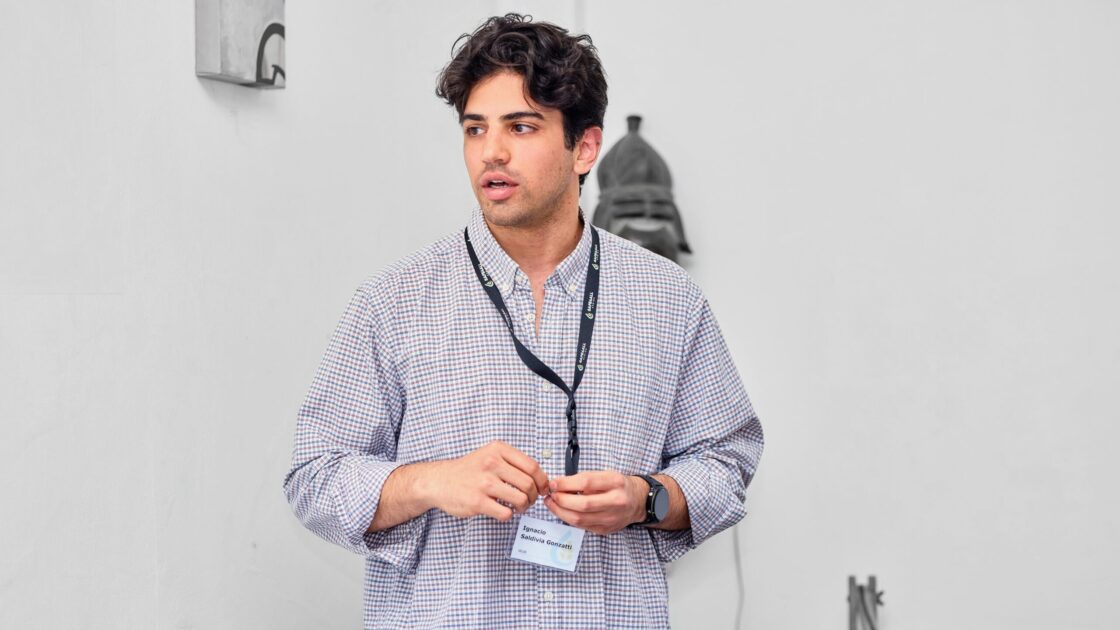
In the next instalment of our series of interviews with PhD students in climate research, PLOS Climate speaks to Ignacio Saldivia Gonzatti of Wageningen University & Research.
What did you study before your PhD, and why did you decide to go on to do a PhD?
My academic path did not start in climate science. I studied a bachelor’s degree in Economics at Complutense University, at the time with a particular interest in the history of economic thought, development economics and econometrics. During my studies, I also developed an interest in climate change and environmental issues. I remember following the news about the Cape Town water crisis and the risk of “Day Zero,” when the city could run out of municipal water. The crisis had multiple causes, but it was triggered in part by a multi-year drought. That made me realise how strongly climatic conditions, alongside economic and governance factors, can shape societal outcomes.
For my master’s degree, I wanted to connect my background in economics with environmental and climate questions, so I pursued my master’s degree at Wageningen University, where interdisciplinary research is the standard. I followed the Climate Studies programme with a focus on environmental economics and completed my research internship at the Global Commons and Climate Policy group at the Kiel Institute for the World Economy. During this period, it became clear that I wanted to continue in research.
A PhD offered the opportunity to pursue this in a setting where research questions are driven primarily by scientific and societal relevance. At the same time, I wanted to broaden my perspective beyond environmental and climate economics and develop a stronger understanding of the physical climate system. This brought me back to Wageningen, where I now work on climate services for agriculture within the Earth Systems and Global Change group.
Could you tell us about your project? What are the key questions you’re hoping to address, and what methods/approaches are you using?
My PhD is part of SAFE4ALL, a Horizon Europe project that aims to address interconnected climate-related challenges in Sub-Saharan Africa by developing climate information services for three countries, Ghana, Kenya, and Zimbabwe. Within SAFE4ALL, I am developing a foodshed-based information service for food security planning. Foodsheds link areas of food production to centres of consumption, allowing a quantitative assessment of supply dependencies and the resilience of food supply chains to climate risks.
My research addresses four questions. First, I examine how foodshed analysis can be used to assess food security and resilience under climate change through a systematic literature review. Second, I test how well short-term climate risks to food production can be anticipated by integrating a crop model (LPJmL) with seasonal climate forecasts. Third, I explore how longer-term climate change and socio-economic development may reshape foodsheds and food security risks by integrating the foodshed framework with Shared Socioeconomic Pathways. Finally, together with potential users, such as municipalities, ministries, and NGOs, we co-evaluate how effectively the insights from the previous steps can be translated into an information service.
Overall, my PhD sits at the intersection of climate services science, agro-climatic and crop systems modelling, statistical climatology, and food systems analysis. More information about my activities within SAFE4ALL can be found here.
What excites you most about your project, and about the wider field?
What excites me most about my project is the opportunity to learn across disciplines while working on a problem with real-world relevance. I interact with researchers from different fields and am motivated by the challenge of translating research into a service that can inform decisions outside academia. In terms of the research focus, I am drawn to using models as tools for understanding complex systems and exploring plausible futures. I am also interested in addressing the uncertainties involved in representing agricultural systems and climate impacts, particularly in data-scarce regions such as Sub-Saharan Africa.
More broadly, I am interested in questions tied to basic human needs. Agriculture supports livelihoods, and climate change is already affecting production systems worldwide. Understanding how societies can adapt to these changes to secure future food supplies is scientifically challenging and socially relevant.
Where you would like to take your career next?
After completing the PhD, I aim to continue in research in an environment that combines scientific work and education. I plan to focus on climate adaptation in agriculture, while expanding my engagement with mitigation and climate economics. Working across topics and disciplines has been central to my training, and I intend to build on this approach in the next stage of my career. I am motivated to continue working in Sub-Saharan Africa, where climate risks to food systems are already pronounced, and to extend this work to South America through collaborations with local researchers.
What are your thoughts on the future of climate research?
The field is broad, so I will focus on a few areas I actively follow. Climate impact research is increasingly moving beyond global mean changes toward the tails of the distribution (i.e., low-probability, high-impact risks) because this is where most ecological, economic, and societal damages occur. While climate models skillfully capture the global mean temperature response to greenhouse gas forcing, key uncertainties remain in impact-relevant processes such as local rainfall patterns, extreme events, and tipping points. As a result, research attention is shifting toward understanding vulnerability, adaptation, and risk management under these tail risks.
In response to these uncertainties, climate research is also becoming more oriented toward local, dynamic, and decision-relevant information, enabled by advances in observations, computing, and machine-learning methods. While artificial intelligence (AI) is increasingly integrated into climate research, its use and relevance will depend on its robustness in specific applications. In a recent perspective, we argue that gains in forecast accuracy, driven in part by AI, must be matched by better contextualisation to ensure that climate information, such as seasonal forecasts for agriculture, is actually usable and used.
In agriculture and food systems, adaptation research is still constrained by limited observations of management practices. For example, global irrigation models often rely on simplified rules rather than observations, and most land-use models do not represent multi-cropping, even though these practices strongly affect yields and water demand. Future research in this area will therefore focus on improving the representation of management practices through better observational data and model structures that more accurately reflect real-world complexity.
Future research will also expand the integration of crop and socio-economic models to capture economic drivers, constraints, and policy trade-offs shaping agricultural decision-making. This integration is often limited because biophysical models analyse biophysical states at fine spatial and temporal scales, while economic models focus on allocation and decision-making at broader scales and in terms of marginal changes (Kragt et al., 2016). Although recent work has advanced model coupling, challenges remain in aligning data, assumptions, and model structures across disciplines (Mgana et al., 2026).
In mitigation research, an emerging challenge concerns aerosols, which have historically masked part of the warming caused by greenhouse gases. As aerosol emissions decline for air-quality reasons, there is uncertainty about the resulting climate response, particularly at regional scales. An open question is how this unmasking interacts with mitigation pathways, as warming rates could temporarily accelerate unless reductions in short-lived greenhouse gases, such as methane, occur alongside declining CO₂ emissions.
This also places methane at the centre of mitigation research, as mitigation options in agriculture are limited and natural sources are likely to increase with warming. As a result, deeper reductions in anthropogenic emissions may be needed to offset growing natural fluxes. Recent research suggests pairing methane mitigation with temporary CO₂ removal, highlighting future research on integrating methane management with carbon dioxide removal strategies. This also extends to the broader CDR landscape, where research is increasingly focused on measurement and verification, permanence, and governance.
Finally, while climate research will continue to evolve, the causes of climate change and the broad solutions are already well understood. The main challenge lies in transforming energy, transport, food systems, and construction, and in aligning political priorities and social acceptance with these transitions. In this context, the challenge is not generating more evidence but translating existing knowledge into decisions and policies that reduce risk and emissions.