
Continuing our series of interviews with PhD students in climate research, PLOS Climate speaks to Jessica Haak, Research Associate and PhD candidate…
Meet PLOS Climate Section Editor David Schoeman
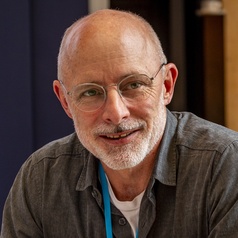
In this blog post, we speak to Prof. David Schoeman, PLOS Climate Section Editor for Ecology & Biogeochemistry.
Could you tell us a bit about how you ended up in your area of study?
Like many scientists, my chosen field of study was shaped by a combination of aptitude and serendipity. My PhD was focused on sandy beach ecology and fisheries modelling, and I followed that with four years as a fisheries ecologist. But after returning to academia, an opportunity arose to undertake a six-month sabbatical. For this, I elected to work with a mathematical ecologist—Anthony Richardson—at the Sir Alister Hardy Foundation for Ocean Science in Plymouth. The intent was to work on Generalised Linear and Additive Models in ecology, and to apply the results to problems in beach ecology. But along the way, we explored some time series of plankton data and stumbled across a result indicating that ocean warming was affecting the base of the marine food chain (phytoplankton and zooplankton) in differing, but predictable ways in different parts of the North Atlantic. The resulting paper was published in Science, and it set me on the road to a career focused on the impacts of climate change on ocean systems.
What’s the focus of your current work, and what questions or issues are you hoping to address?
My current focus revolves around ecological analysis and synthesis of climate impacts and solutions, primarily in ocean systems. Probably the most exciting aspect of this work is the emerging field of climate-smart conservation planning.
Why do the principles of Open Access and Open Science matter to you?
Having worked in South Africa, and collaborated with many researchers in developing countries, I am acutely aware of how difficult it is for many researchers—and most of the public—to access the scientific literature. Moreover, the more accessible and transparent the science is, the easier it is to assess its robustness and generality. Open access publishing and science are therefore a concepts that I strongly support.
What kind of papers would you be particularly excited to see submitted to your section of PLOS Climate?
I’m an ecologist, so I’d like to see more papers focusing on the observed and projected impacts of climate change on living systems. I’d also like to see more papers about solutions. Given the current landscape of geopolitics, I would also like to see authors think more carefully about what sorts of futures are most likely, and to make projections using corresponding scenarios. What is more likely: 2ºC of warming by 2100, or 4ºC of warming? Or somewhere in between? Do we really think that pathways to either of these temperatures will be monotonic? Or will society risk intervening in the climate system to reverse warming before the end of the century, either to reduce impacts that are manifesting or to meet some pre-agreed climate target—the so-called “overshoot” scenarios? By considering the most plausible futures, authors can ensure that their research is most policy-relevant and therefore most useful to society.
Ready to submit your work to PLOS Climate‘s Ecology & Biogeochemistry section? Follow our step-by-step guide to the submission process!