
Many of the sessions, including keynote speeches and deep-dive panel discussions, from World Water Week 2025 are now available via their YouTube…
World Water Week: A Global Water and Climate Dialogue
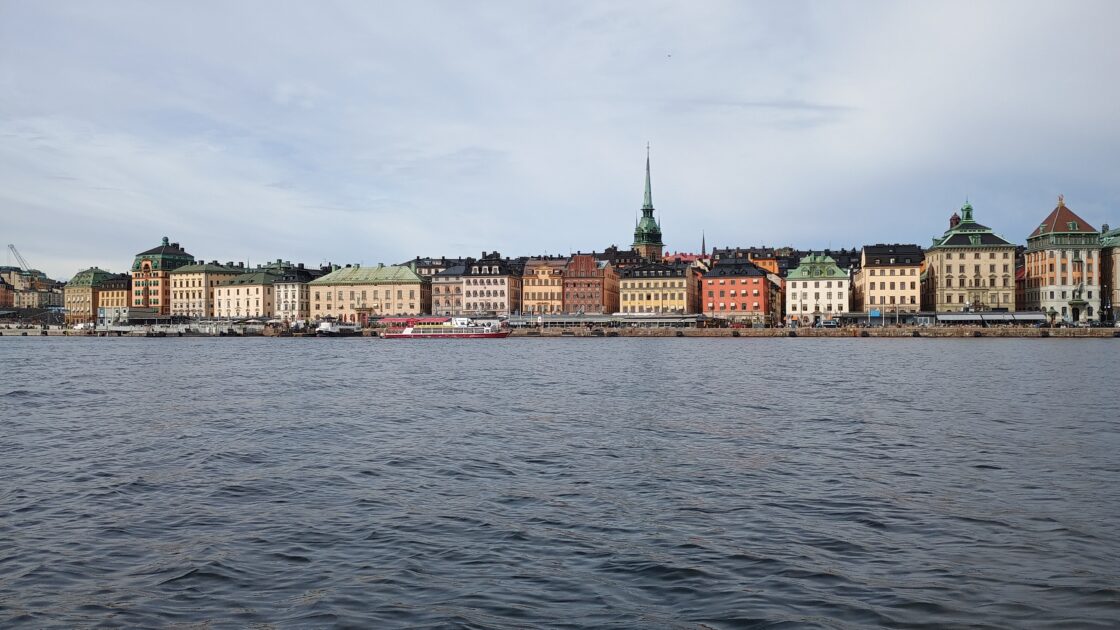
Image credit
Picture by Jamie Males
Many of the sessions, including keynote speeches and deep-dive panel discussions, from World Water Week 2025 are now available via their YouTube channel.
Humnah Fayyaz is an impact communicator working at the intersection of climate science, policy, and water governance. She is passionate about translating research and policy into stories that inspire action and inclusivity in global climate and water dialogues.
Hosted by Stockholm International Water Institute (SIWI), World Water Week’s theme for 2025, Water for Climate Action, has taken me down memory lane.
My relationship to climate isn’t new. Having spent nearly all my life in Pakistan, I have been a firsthand witness to the impacts of climate change. I still have fond memories of heavy monsoon rainfalls and ideal weather in my hometown, Karachi. During my childhood, Karachi used to be a city famous for its unpredictable weather, when the hot days would suddenly give way to pleasant evenings, when the temperatures would drop down and a cool breeze would circulate the city. As I grew up, Karachi became hotter every year. Then came the worst heat wave, which killed more than 1200 people in only 9 days in June 2015. When France put forward the Paris Agreement later that year at COP21, I knew that was my calling. It took me six years to secure a Master’s degree in Climate Science and arrive in the city where it all started, walking in the hallways where brilliant minds had worked to put the agreement in motion.
In 2023, when I first arrived in Stockholm, I was a young professional in the climate sector, and still new to the water world. Global Water Partnership was my first ever introduction to the water space, but it soon became my passion. That August, I stepped into the Stockholm Waterfront Congress Centre as a World Water Week Volunteer Assistant at the world’s biggest annual water conference. I had no idea just how life-changing the experience would be. Today looking back, I realise that it wasn’t just a conference but the beginning of a whole new chapter. World Water Week launched my dream team – South Asia Young Women in Water (SAYWiW) – four South Asian women on a drive to change the world. The yearly event for the water community marks my annual pilgrimage to Stockholm to restrengthen my ambition, not give up, and keep true to my vision to make this a water-secure world.
With World Water Week an integral part of my journey, I’m always on the lookout to find new ways to contribute to the conference. Each year, SIWI finds ways to include young people, to give their voices a global platform; a Volunteer Assistant, a Junior Rapporteur, or a Young Scientific Programme Committee (YSPC) member. Being a part of the operations teams before, I had some idea of the scale that the conference operated on, but stepping into the role of the Scientific Programme Committee (SPC) as a young professional this year opened my eyes to the magnitude of preparation and planning that happens long before participants walk into the venue.
Many people have never heard of the SPC, but this group of academics, scientists, water experts, and practitioners who, including the young committee members (YSPCs), play an important role in the experience. The SPC helps to set the overarching theme and scope for World Water Week, develop the SIWI Seminars and their topics, and organise the scientific sessions at the event. The SPC is also responsible for ensuring the high quality of content and science. For most participants, the conference is five days of back-to-back sessions, hallway conversations over Fika, and catching up with old friends over Josh Newton’s annual dance and drinks. But for every single one of us behind the curtain, it’s nine months of our blood, sweat, and tears (sometimes, quite literally!) to ensure the best possible experience and integrity of the content.
Every seminar at World Water Week reflects hours of discussion over months and years. Which themes deserve attention? Whose voices need to be at the table? How do we balance cutting-edge science with practical solutions from the ground? At times, YSPCs may feel lost in the enormity of the tasks – aiming to do what is right for the water world. Joining long meetings, contributing to securing co-convenors, confirming multiple speakers (and more backups), organizing prep sessions and dry runs, and figuring out contingencies for literally anything and everything that could possibly go wrong with the seminar sessions. The eight of us YSPCs have all come a long way in a few months. And no matter how hard it seemed at times, I believe I speak for us all that every bit of it was worth what we gave and that we’d do it all over again.
Because World Water Week isn’t just another annual international conference. It’s a beacon that stands tall in the face of all adversity, telling the world that water is at the centre of ecosystem growth, resilience, and regeneration, as well as climate solutions. World Water Week is our annual celebration to honour the sacred lifeblood of not just our ecosystems but also the economy. That vision only comes to life because of the work that happens behind the scenes.
Some of the most meaningful moments of my YSPC journey were not in formal online meetings, but in the quiet late-night check-ins when a colleague felt exhausted, or in the bursts of laughter after a long day of seminar planning. Those moments reminded me that conferences are built not just on logistics, but on human connection. Among the emotions since the conference, first and foremost remains the gratitude to be a part of the SPC team that shapes the SIWI Seminar Series. I feel so proud to see several months of our collective effort come to fruition and receive the recognition it so rightfully deserves.
This year, I hope participants have not only gained new knowledge, but also a renewed sense of responsibility. The conversations we started in Stockholm must ripple outward into policies, into projects, into the way we live our daily lives. Water is not only a scientific or policy issue over five days of networking in Stockholm; it is deeply cultural, deeply human.
And as I look at the thousands of people that gathered in Stockholm in 2025, I am reminded of something simple yet profound: when we honour water, we honour life itself. I feel grateful to have played a small part in shaping that honour.